Most people have either been sold something they'll never claim on, or have nothing at all and assume they're covered. Half an hour tells you which one you are. If you're fine as you are, that's what I'll tell you.
This page is general information, not personal advice — advice comes after a conversation about your circumstances.
Before anyone talks to you about a product, it's worth knowing what already exists. For most people it's less than they assume.
Statutory Sick Pay, per week, for up to 28 weeks. Your contract may pay more than this and many do — but this is the legal floor, and for some people it's the whole amount.
There is no Statutory Sick Pay for the self‑employed. No floor at all. Whatever you've saved is the plan.
SSP rates and duration from GOV.UK, correct at November 2026. Check your own employment contract for what it says about occupational sick pay — it's the single most useful thing you can read before buying anything.
Almost everyone I speak to has thought about dying. Hardly anyone has thought about surviving.
People in the UK born after 1960 will be diagnosed with cancer.
Half of those diagnosed now survive it for ten years or more.
Figures from Cancer Research UK.
Treatment itself is free. Everything around it isn't, and nobody budgets for any of it.
The mortgage leaves your account on the same day it always did. Chemo doesn't pause your direct debits, and no lender has ever accepted a diagnosis as a reason not to pay.
Appointments are mid‑week and they are relentless. In most households that means a partner drops hours or stops altogether — so the illness takes two incomes, not one.
The thing people regret most isn't the money. It's being back at work six weeks after finishing treatment because the money ran out, when their body wasn't ready.
Most people only need some of them. Tap any one to see what it gets you.
Your wage keeps arriving.
A lump sum, while you're still being treated.
Seen in days, not months.
Nobody has to sell the house.
Depending on the plan. Worth knowing before you assume you're only paying for the bad day.
Some of these are standard and some are optional extras, and they vary by provider — so this is what exists, not a description of one policy.
No Statutory Sick Pay, no occupational sick pay, no employer behind you. The gap starts on day one.
Occupational sick pay is usually generous, and it is finite. It's worth knowing exactly where yours ends.
The payment doesn't pause because your income did. Lenders generally ask you to cover the building, not the person paying for it.
One income supporting a household has no second income to absorb the shock.
WhatsApp or a phone call. Tell me roughly what you're trying to work out and we'll find a time.
What you earn, what you'd fall back on, what you already have, and who depends on it. Phone or video — usually half an hour.
If cover makes sense I'll research the market and explain the options in plain English. If it doesn't, I'll tell you that instead.
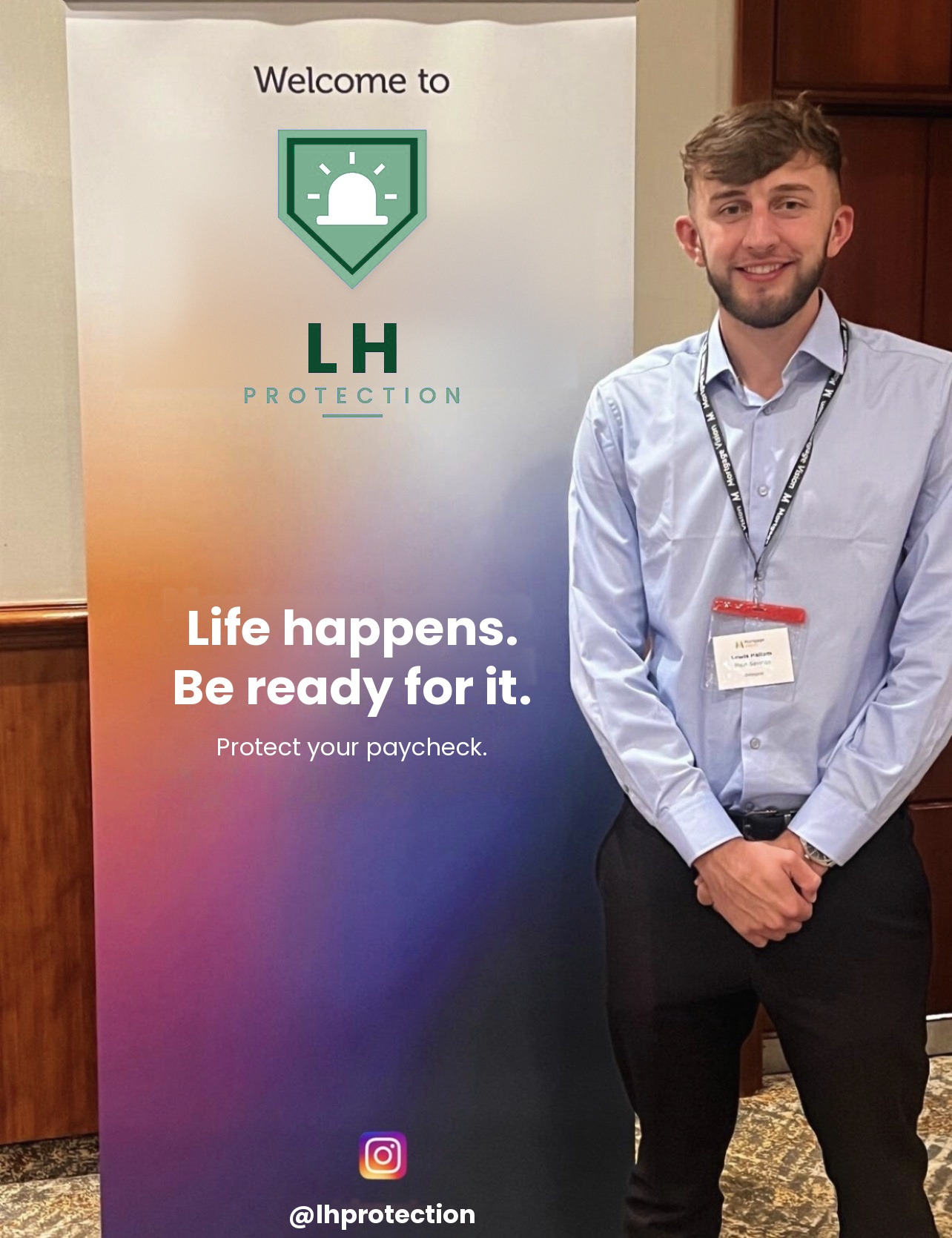
Before this I trained as a paramedic — a first class degree and 2,300 hours of clinical placement. That job is the reason I do this one. I'd rather talk you out of cover you don't need than sell you cover you don't understand.
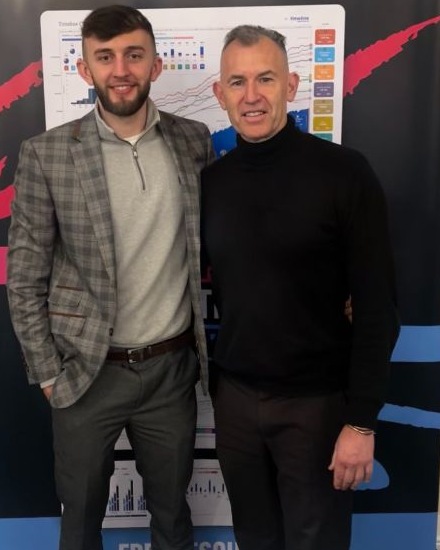
Thirty years in financial services, and qualified across wealth management and pensions as well as protection. Jim does the research and the technical work behind every recommendation, which means what reaches you has been checked by someone who has seen a great many policies and how they behave at claim.
Maybe not. It depends entirely on what your contract says, and contracts vary enormously — some pay full salary for months, some pay the statutory minimum and nothing more.
Two things to check: how much, and for how long. Once you know where your employer's cover stops, you know whether there's a gap worth insuring. If there isn't one, there isn't one.
Critical illness cover pays a lump sum when you're diagnosed with one of the conditions named in the policy. It pays once.
Income protection pays a monthly income while illness or injury stops you working, whatever the cause. It doesn't need a diagnosis from a list — it needs you to be unable to work.
They're often sold together. Whether you need one, both or neither depends on what you'd fall back on.
It's the most important line in an income protection policy, and it varies between providers. Broadly there are three definitions:
Own occupation — you can't do your job. Suited occupation — you can't do your job or anything similar to it. Any occupation — you can't do any job at all.
Those are three very different products at three very different prices. If you only ask one question about a policy, ask this one.
It depends on your age, your health, whether you smoke, your occupation, how much cover you want, how long you'd wait before it pays, and how long it would pay for. Those variables move the price a long way, so any figure quoted before that conversation is a guess.
What I can tell you is that the quote is free and there's no obligation attached to it.
The monthly cost is based on your age and health, so cover generally costs less the earlier you take it out, and some conditions can restrict what's available later. That's a genuine reason to look at it sooner.
It isn't a reason to buy something you don't need. If you've no dependants, no mortgage and savings that would carry you, the honest answer might be that you've got time.
Often yes, though it may come with an exclusion for anything related to that condition, a higher monthly cost, or both. Providers differ considerably in how they treat particular conditions, which is a large part of what the research stage is for.
It's worth asking before assuming you'd be declined.
Google rating for Plain Savings as at November 2026. Ratings change as new reviews are left.
Thirty minutes, no cost, and no obligation at the end of it. Bring your employment contract if you can find it.